ALL FLASH ARRAY HARDWARE
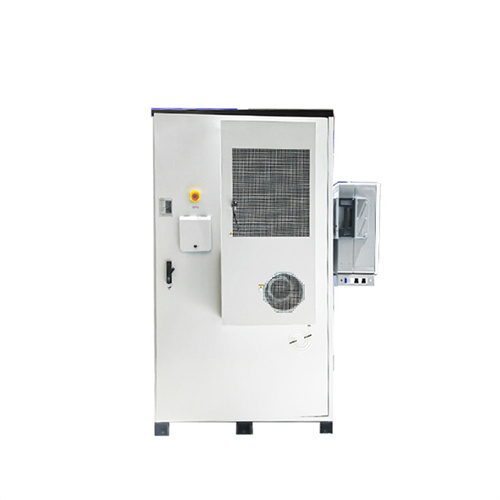
The relationship between photovoltaic brackets and hardware
Photovoltaic mounting systems (also called solar module racking) are used to fix on surfaces like roofs, building facades, or the ground. These mounting systems generally enable retrofitting of solar panels on roofs or as part of the structure of the building (called ). As the relative costs of solar photovoltaic (PV) modules has dropped, the costs of the racks have become. [pdf]FAQS about The relationship between photovoltaic brackets and hardware
What are solar panel brackets?
Solar Panel Brackets: The Ultimate Guide, types and best options. Solar panel brackets are an essential component of any solar panel system. They are used to secure solar panels onto rooftops, ground mounts, or other structures. The brackets are designed to withstand harsh weather conditions and provide a secure foundation for the panels.
How do solar panel brackets work?
Solar panel brackets mount solar panels on roofs or other structures. The brackets are designed to securely hold the panels in place while allowing for proper air circulation, which keeps the panels cool and operating efficiently.
How to choose solar panel mounting hardware?
Selecting appropriate mounting hardware is vital for solar panels’ optimal performance and longevity. The suitable mounts secure the panels firmly and influence their energy absorption efficiency by positioning them at the ideal angle and orientation. 1. Overview of Types of Solar Panel Mounts 2. Materials Used in Solar Panel Mounting Hardware 3.
Do solar panel brackets need to be installed correctly?
Proper bracket installation is key to ensuring the longevity and performance of a solar panel system. Solar panel brackets are an important part of the installation process and should be installed by a professional. The brackets must be installed correctly to ensure the safety and longevity of the solar panel system.
What are mounting brackets & rails for solar panels?
Mounting Brackets are the primary components that attach the solar panels to the mounting surface. They come in various types depending on the mounting surface (roof, ground, pole, etc.). Rails: Rails are long, horizontal structures attached to the solar panels using clamps. They provide a stable base for the solar panels.
What is a photovoltaic mounting system?
Photovoltaic mounting systems (also called solar module racking) are used to fix solar panels on surfaces like roofs, building facades, or the ground. [ 1 ] These mounting systems generally enable retrofitting of solar panels on roofs or as part of the structure of the building (called BIPV). [ 2 ]

Solar cell array Hong Kong
The lists given below (through hyperlinks) are not meant to be exhaustive. For the list of examples of government-funded projects, some smaller projects and latest projects are not included. For the list of examples of non-government projects, it is compiled from the Survey on Renewable Energy Installations, which started in. . A 350 kW PV installation has been installed on the roof of the New EMSD Headquarters in Kowloon Bay. This installation comprises a. . Building-integrated PV installations (grid-connected) have been installed on nine buildings in the Science Park. Total capacity of all the installations is 198 kW. . The Kowloon Hospital PV Installation is grid-connected and was announced in July 2007. Peak capacity of the system is 9 kW. . The Wanchai Tower PV Installation (grid-connected) consists of three subsystems - Rack Type Subsystem on the roof, Sunshade Screen Type Subsystem outside windows, and. [pdf]FAQS about Solar cell array Hong Kong
What is the largest solar energy generation system in Hong Kong?
Currently the largest solar energy generation system in Hong Kong has been installed at Hong Kong Disneyland Resort. This system has a capacity of 3,050 kW, comprised over 7500 monocrystalline solar panels at mainly rooftop of over 40 buildings at the Resort. It is expected to generate over 3,300,000 kWh annually.
Which PV systems are grid connected in Hong Kong?
as below:Standalone SystemsGrid-connected PV Systems Hybrid PV systemsMost of the PV systems in Hong Kong are grid connected. Grid-connected PV systems shall meet grid connection
How solar energy is used in Hong Kong?
Solar energy can be used to produce hot water or directly transform into electrical power. The systems related to solar energy application include solar thermal systems (solar water heating, solar refrigeration) and photovoltaic (PV) system. Early application of solar energy in Hong Kong is mainly used for water heating.
What are the different types of photovoltaic systems in Hong Kong?
Photovoltaic systems in Hong Kong can be classified into two main types - stand-alone systems and grid-connected systems. These can further be divided into ordinary photovoltaic systems and building-integrated photovoltaic (BIPV) systems.
What is the peak capacity of a solar system in Hong Kong?
Peak capacity of the system is around 9 kW. The PV installation in the Hong Kong Museum of Coastal Defense is grid-connected and was installed in 2008. It was made up of 60 nos. of solar panels . Peak capacity of the system is around 7.8kW. The PV installation in the Hong Kong Museum of Art is grid-connected and was installed in 2008.
Can building-integrated solar PV systems help Hong Kong achieve a low-carbon future?
These projections account for 12.68%–16.32% of Hong Kong's total electricity consumption in 2022. This study underlines the substantial role of building-integrated solar PV systems in Hong Kong's transition towards a low-carbon future, offering valuable insights for policymaking and implementation strategies.

How many photovoltaic panels are there in each array
The powerrequired by our daily loads range in several watts or sometimes in kilo-Watts. A single solar cell cannot produce enough power to fulfill such a load demand, it can hardly produce power in a range from 0. . One of the basic requirements of the PV module is to provide sufficient voltage to charge the batteriesof the different voltage levels under daily solar radiation. This implies that the. . One of the most common cells available in the market is “Crystalline Silicon Cell” technology. These cells are available in an area of 12.5 × 12.5 cm2 and 15 ×15 cm2. It is difficult to find. . Bypass DiodeAll the cells connected in series in the PV module are identical they all produce current when light falls on them. But if one of the solar cells. . We have already explained very well this topic in our previous post labeled as Series, Parallel & Series-Parallel Connection of PV Panels.You will be able to wire to solar module strings a. [pdf]FAQS about How many photovoltaic panels are there in each array
How many PV panels are in a PV array?
A PV array can be composed of as few as two PV panels to hundreds of PV panels. The number of PV panels connected in a PV array determines the amount of electricity the array can generate. PV cells generate direct current (DC) electricity. DC electricity can be used to charge batteries that power devices that use DC electricity.
What is a solar PV module array?
Such a connection of modules in a series and parallel combination is known as “Solar Photovoltaic Array” or “PV Module Array”. A schematic of a solar PV module array connected in series-parallel configuration is shown in figure below. Solar Module Cell: The solar cell is a two-terminal device.
What is a photovoltaic array?
The size of a photovoltaic array can consist of a few individual PV modules or panels connected together in an urban environment and mounted on a rooftop, or may consist of many hundreds of PV panels interconnected together in a field to supply power for a whole town or neighbourhood.
How are solar panels connected in a single photovoltaic array?
The connection of the solar panels in a single photovoltaic array is same as that of the PV cells in a single panel. The panels in an array can be electrically connected together in either a series, a parallel, or a mixture of the two, but generally a series connection is chosen to give an increased output voltage.
How to increase the current N-number of solar PV modules?
To increase the current N-number of PV modules are connected in parallel. Such a connection of modules in a series and parallel combination is known as “Solar Photovoltaic Array” or “PV Module Array”. A schematic of a solar PV module array connected in series-parallel configuration is shown in figure below. Solar Module Cell:
What are photovoltaic panels?
Photovoltaic panels include one or more PV modules assembled as a pre-wired, field-installable unit. A photovoltaic array is the complete power-generating unit, consisting of any number of PV modules and panels.