MODAL ANALYSIS OF ENGINE SUPPORTING BRACKET USING FINITE ELEMENT ANALYSIS
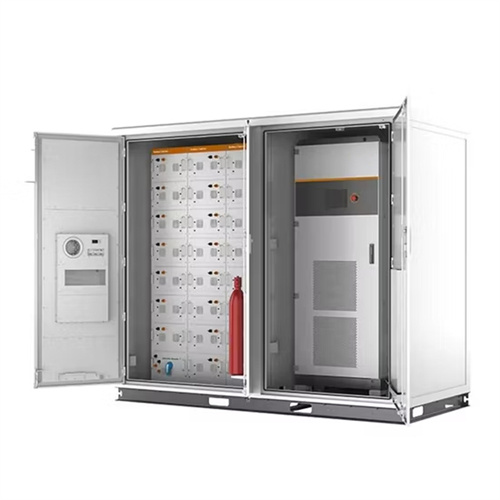
Energy storage cabinet market space analysis drawing
Energy storage systems (ESS) are increasingly deployed in both transmission and distribution grids for various benefits, especially for improving renewable energy penetration. Along with the industrial acceptanc. . ••We present an overview of energy storage systems (ESS) for grid a. . Energy storage systems (ESS) are continuously expanding in recent years with the increase of renewable energy penetration, as energy storage is an ideal technology for he. . ESS can be classified, according to the energy form in which the electricity is stored, into five main categories: 1) mechanical, 2) electrochemical, 3) chemical, 4) elec. . To facilitate the discussion on the grid applications of ESS, we first classify ESS based on the physical locations in the grid where these systems are installed (or their grid domains). E. . Although ESS bring a diverse range of benefits to utilities and customers, realizing the wide-scale adoption of energy storage necessitates evaluating the costs and benefits of ESS i. . The Federal Energy Regulatory Commission (FERC) has given a definition of electric storage resources (ESR) to cover all ESS capable of extracting electric energy from the. [pdf]
Analysis of energy storage lithium battery market trend
Global demand for Li-ion batteries is expected to soar over the next decade, with the number of GWh required increasing from about 700 GWh in 2022 to around 4.7 TWh by 2030 (Exhibit 1). Batteries for mobility appli. . The global battery value chain, like others within industrial manufacturing, faces significant environmental, social, and governance (ESG) challenges (Exhibit 3). Together with G. . Some recent advances in battery technologies include increased cell energy density, new active material chemistries such as solid-state batteries, and cell and packaging produ. . The 2030 outlook for the battery value chain depends on three interdependent elements (Exhibit 12): 1. Supply-chain resilience. A resilient battery value chain is one that is region. . Battery manufacturers may find new opportunities in recycling as the market matures. Companies could create a closed-loop, domestic supply chain that involves the collection, re. . Value chain depth and concentration of the battery industry vary by country (Exhibit 16). While China has many mature segments, cell suppliers are increasingly announcing capa. [pdf]
Analysis of the reasons for the sharp drop in photovoltaic panel prices
In a report last month, the MIT team identified public and private research and development (R&D) and improvements in cell efficiency as the major factors contributing to a 99 percent reduction in . [pdf]FAQS about Analysis of the reasons for the sharp drop in photovoltaic panel prices
Will solar panel prices drop 40% this year?
Tim Buckley, director of Climate Energy Finance, speaks to pv magazine about the current steep trajectory of solar module prices. He estimates that PV panels prices will end up dropping by 40% this year and predicts the closure of old technology and sub-scale solar manufacturing facilities, both in China and globally.
What causes photovoltaics cost decline?
We model technology improvement to identify causes of photovoltaics (PV) cost decline. Improvements to module efficiency and materials costs were important. Since 2001, increasing plant size enabled economies of scale to reduce costs. Market-stimulating policies were responsible for a large share of PV's cost decline.
What factors influence cost reductions in solar photovoltaics?
Beyond the learning curve: factors influencing cost reductions in photovoltaics U.S. energy research and development: Declining investment, increasing need, and the feasibility of expansion Pillai, U., Cruz, K., 2013. Source of Cost Reduction in Solar Photovoltaics.
Why are solar and battery storage prices falling?
The study focuses on solar and battery storage, but the researchers note that wind power, heat pumps, and other clean technologies are also seeing a sharp drop in prices, too. Technological advances are making solar and battery storage smarter and more efficient.
How does technology affect the cost of solar power?
This states that the cost of technology falls consistently as the cumulative production of that technology increases. The chart shows the perfect example of this for solar power. This data comes from the International Renewable Agency, Greg Nemet, and Doyne Farmer & François Lafond.
How can R&D help reduce PV module cost?
R&D, both public and private, was a key driver of module cost reduction historically and can be valuable going forward in improving module efficiency and reducing materials use. Improvements to module efficiency in particular would help cut the per-watt cost of all cost components of PV modules (as well as PV systems).