TEMPERATURE AND HUMIDITY CONTROLLED CABINET

What does energy storage cabinet container mean
. A Containerized Energy-Storage System, or CESS, is an innovative energy storage solution packaged within a modular, transportable container. It serves as a rechargeable battery system capable of storing large. . These systems consist of energy storage units housed in modular containers, typically the size of shipping containers, and are equipped with advanced battery technology, power electronics, thermal management. [pdf]FAQS about What does energy storage cabinet container mean
What is a containerized battery energy storage system?
Containerized Battery Energy Storage Systems (BESS) are essentially large batteries housed within storage containers. These systems are designed to store energy from renewable sources or the grid and release it when required. This setup offers a modular and scalable solution to energy storage.
What is a container energy storage system?
Container energy storage systems are typically equipped with advanced battery technology, such as lithium-ion batteries. These batteries offer high energy density, long lifespan, and exceptional efficiency, making them well-suited for large-scale energy storage applications. 3. Integrated Systems
What is a battery energy storage system (BESS)?
By definition, a Battery Energy Storage Systems (BESS) is a type of energy storage solution, a collection of large batteries within a container, that can store and discharge electrical energy upon request.
What is a containerized energy storage system (cess)?
A Containerized Energy Storage System (CESS) operates on a mechanism that involves the collection, storage, and distribution of electric power. The primary purpose of this system is to store electricity, often produced from renewable resources like solar or wind power, and release it when necessary.
What is an example of a containerized energy storage system?
Examples include a solar-powered CESS in a remote South Pacific island, a CESS integrated into a municipal power grid in a Californian city, and an industrial CESS used by a mining company in Australia. Q7: What is the environmental impact of using a Containerized Energy Storage System?
What are battery energy storage systems?
This data is used for system optimization, maintenance planning, and regulatory compliance. Battery Energy Storage Systems play a pivotal role across various business sectors in the UK, from commercial to utility-scale applications, each addressing specific energy needs and challenges.
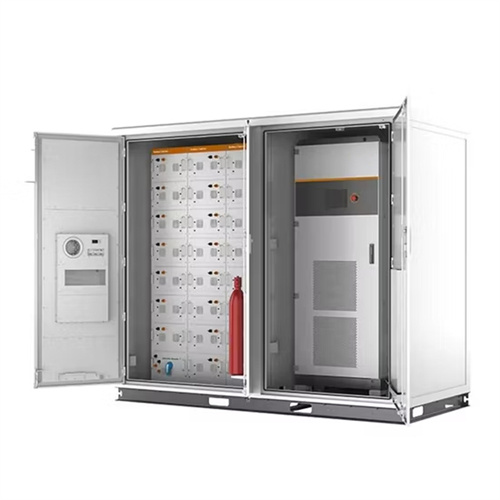
Energy storage cabinet market space analysis drawing
Energy storage systems (ESS) are increasingly deployed in both transmission and distribution grids for various benefits, especially for improving renewable energy penetration. Along with the industrial acceptanc. . ••We present an overview of energy storage systems (ESS) for grid a. . Energy storage systems (ESS) are continuously expanding in recent years with the increase of renewable energy penetration, as energy storage is an ideal technology for he. . ESS can be classified, according to the energy form in which the electricity is stored, into five main categories: 1) mechanical, 2) electrochemical, 3) chemical, 4) elec. . To facilitate the discussion on the grid applications of ESS, we first classify ESS based on the physical locations in the grid where these systems are installed (or their grid domains). E. . Although ESS bring a diverse range of benefits to utilities and customers, realizing the wide-scale adoption of energy storage necessitates evaluating the costs and benefits of ESS i. . The Federal Energy Regulatory Commission (FERC) has given a definition of electric storage resources (ESR) to cover all ESS capable of extracting electric energy from the. [pdf]
Interposing relay cabinet Bahamas
Here in this case we are operating a PLC with a contactor with a single-phase AC supply. The PLC relay is DC type with an output voltage of 24 V. But we need a DC type interposing relay with a coil voltage of 24V DC but the contact AC type with 230 V. The PLC operates interposing relay in the first stage & Contactor. . The PLC relay can only avail 1A at 110 VAC, but the relay connected to the controller needs 3A at 110 VAC. Here, an interposing relay with. . The function of interposing relay is to separate 1. Two dissimilar or non-identical systems. 2. One voltage level from another. 3. Energize the starter to switch on the electric motor. [pdf]FAQS about Interposing relay cabinet Bahamas
What are interposing relay panels in industrial control?
Interposing relay panels in industrial control are used to communicate the signals and status between the Automation system such as DCS & PLC and electrical modules in Machine control centre (MCC) such as motor control units, motors, pumps, lamps, and so on.
Why is interposing relay important?
This will collapse the relay coil’s magnetic field. Interposing relay saves one system when the system connected on the other side of the relay gets damaged. The damage can be due to a short circuit or earthing issue. Interposing relay will also make communication between high voltage rated PLC and low voltage rated PLC.
Which type of interposing relay is needed for a PLC?
The PLC relay is DC type with an output voltage of 24 V. But we need a DC type interposing relay with a coil voltage of 24V DC but the contact AC type with 230 V. The PLC operates interposing relay in the first stage & Contactor through its Auxiliary contacts.
What is an example of an interposing relay between mismatched devices?
An industrial example of an interposing relay between mismatched devices is shown here, where an AC output proximity switch must trigger an input channel to a Programmable Logic Controller (PLC) rated for only 24 volts DC:
Can control relays be interposed?
It is worth noting that although control relays can be interposed for safety reasons, this is not synonymous with the category of devices called ' safety relays ' with redundant sets of input coils and contact sets which meet strict safety regulations, normally for motor and motion applications.
What is an interposing relay coil?
Interposing relay coil requires a minimum voltage and lower current than the driving relay. Along with directly performing logic functions, an electromechanical relay can also be used as an interposing system between dissimilar probes, sensors, controllers, and/or control devices.